Next-Generation Neonatal Respiratory Care
PNOIA is developing a next-generation CPAP interface for premature infants in the NICU, built to combine the therapeutic reliability clinicians depend on with the comfort and simplicity they’ve been asking for.
The Problem
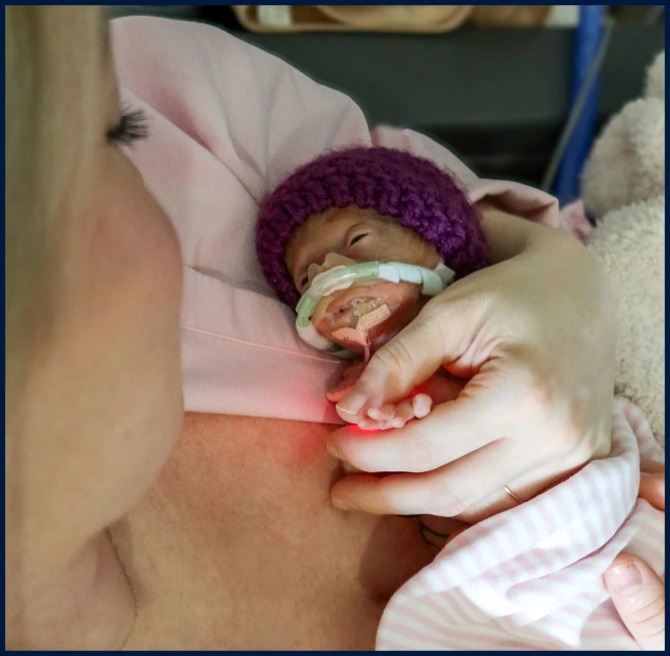
Meet Violet
Born premature and, like millions of infants each year, dependent on CPAP support to breathe. Her story is common — and so are the complications caused by the interface delivering her care.
11 million premature babies each year will need respiratory support.
Water condenses in the tubing and drips toward the airway. Clinicians must repeatedly stop therapy to clear it, causing dangerous pressure drops.
Bulky masks shift easily during routine care, especially when infants are positioned on their stomachs. Nurses often only notice a broken seal once a baby’s heart rate drops.
Prolonged contact with rigid interfaces damages fragile nasal tissue, sometimes forcing early device changes.
Pressure is measured far from the infant, so clinicians can’t confirm what pressure the baby is actually receiving.
Even experienced clinicians can misapply current devices, adding risk in already understaffed NICUs.
Clinicians often move infants to lower-support interfaces early to avoid these complications — despite significantly higher failure rates — raising the risk of longer-term lung disease and extended NICU stays.
“My nurses do frequent rounds to check for condensation, but my patients are still aspirating on water.”
Neonatologist
“Masks are frequently dislodged, particularly when infants are on their stomachs, which can cause drops in heart rate.”
NICU Nurse
“My customers have been asking me: why aren’t my patients getting better?”
Medical Device Distributor
Our Solution
PNOIA is designed to give clinicians what they’ve been missing: reliable therapeutic pressure, a simplified application process, and a low-profile design that doesn’t force a trade-off between comfort and efficacy.
A more reliable connection between device and patient, reducing leaks that compromise therapy.
Engineered to reduce water buildup in the circuit, lowering the risk of interrupted therapy.
A lower-profile design that stays secure through routine care and repositioning — compact enough to support skin-to-skin (kangaroo) contact between parent and baby.
A customizable interface designed to be gentler on fragile, premature skin over extended wear.
Clinicians can alternate between interface types quickly, without a new setup or extra tubing changes, to help protect skin over time.
Designed to work with the CPAP infrastructure hospitals already use.
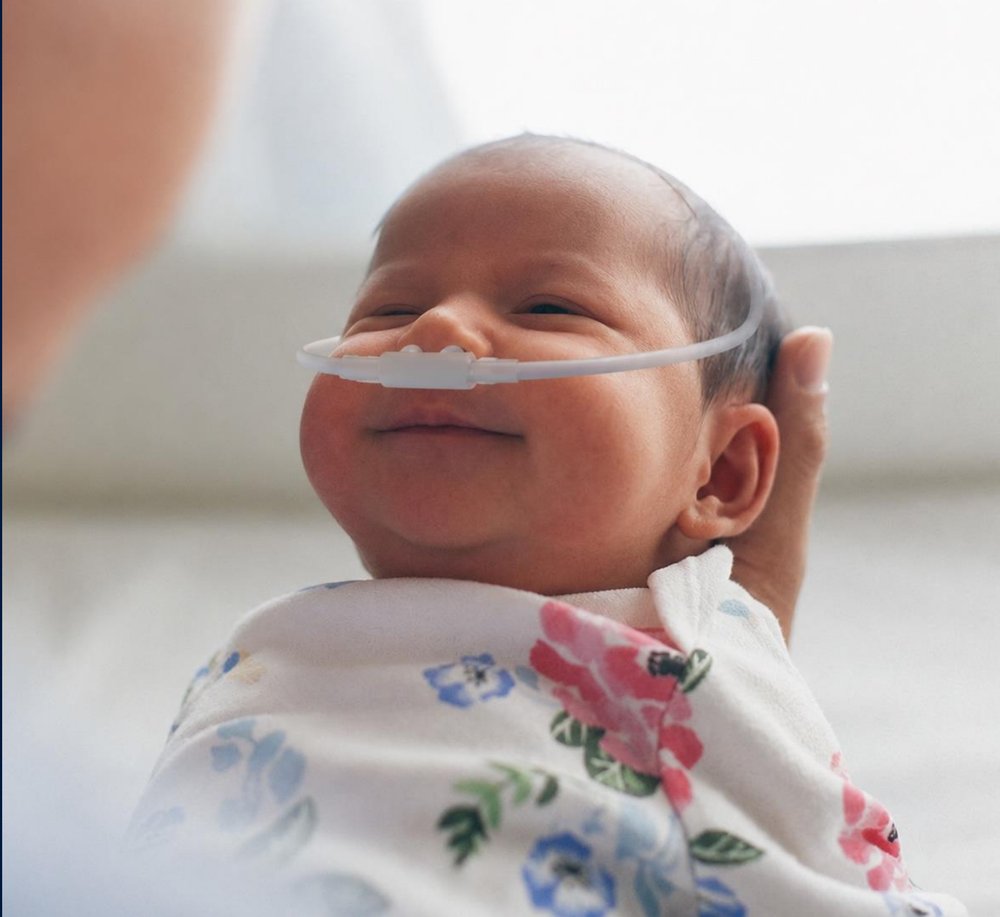
PNOIA is currently in development, with testing and clinical validation underway ahead of FDA clearance.
Market Opportunity
The current standard of care hasn’t meaningfully changed in years, even as NICUs scale globally. The RAM Cannula — the dominant “low-profile” alternative to bubble CPAP — is being phased out of major hospitals due to unreliable pressure delivery, and clinicians have no better low-profile option today. That gap is PNOIA’s entry point.
Pursuing FDA 510(k) clearance as a Class II device via the substantial equivalence pathway, with biocompatibility and ISO testing planned ahead of submission.
Partnering with NICU clinical sites for early pilot programs to generate real-world outcomes data ahead of commercial launch.
Direct engagement with procurement departments and distributors, informed by our neonatology and respiratory therapy advisors, to drive adoption at scale.
Competitive Landscape
Current options force clinicians to choose between therapeutic efficacy and patient comfort. PNOIA is designed to deliver both.
| Effective CPAP Pressure |
Low Profile / Prone-Friendly |
Condensation Control |
Pressure Feedback |
Skin Safety |
Simple Application |
|
|---|---|---|---|---|---|---|
| Fisher & Paykel Flexi Trunk |
✓ | ✕ | ✕ | ✕ | ✕ | ✕ |
| Hudson Nasal Prongs Teleflex |
✓ | • | ✕ | ✕ | ✕ | • |
| RAM Cannula Neotech |
✕ | ✓ | ✕ | ✕ | • | ✓ |
| PNOIA System | ✓ | ✓ | ✓ | ✓ | ✓ | ✓ |
RAM Cannula has a documented 31–51% CPAP failure rate and no pressure monitoring.
The Team

Cofounder & CEO
B.S. Biomedical Engineering. Previously at Edwards Lifesciences.

Cofounder & CTO
B.S. Mechanical Engineering. Previously at Stryker and Abbott.
Neonatologist
Neonatologist
Neonatologist
Respiratory Therapist

We are currently seeking strategic partners, clinical collaborators, and early-stage investors.
Get in Touch